


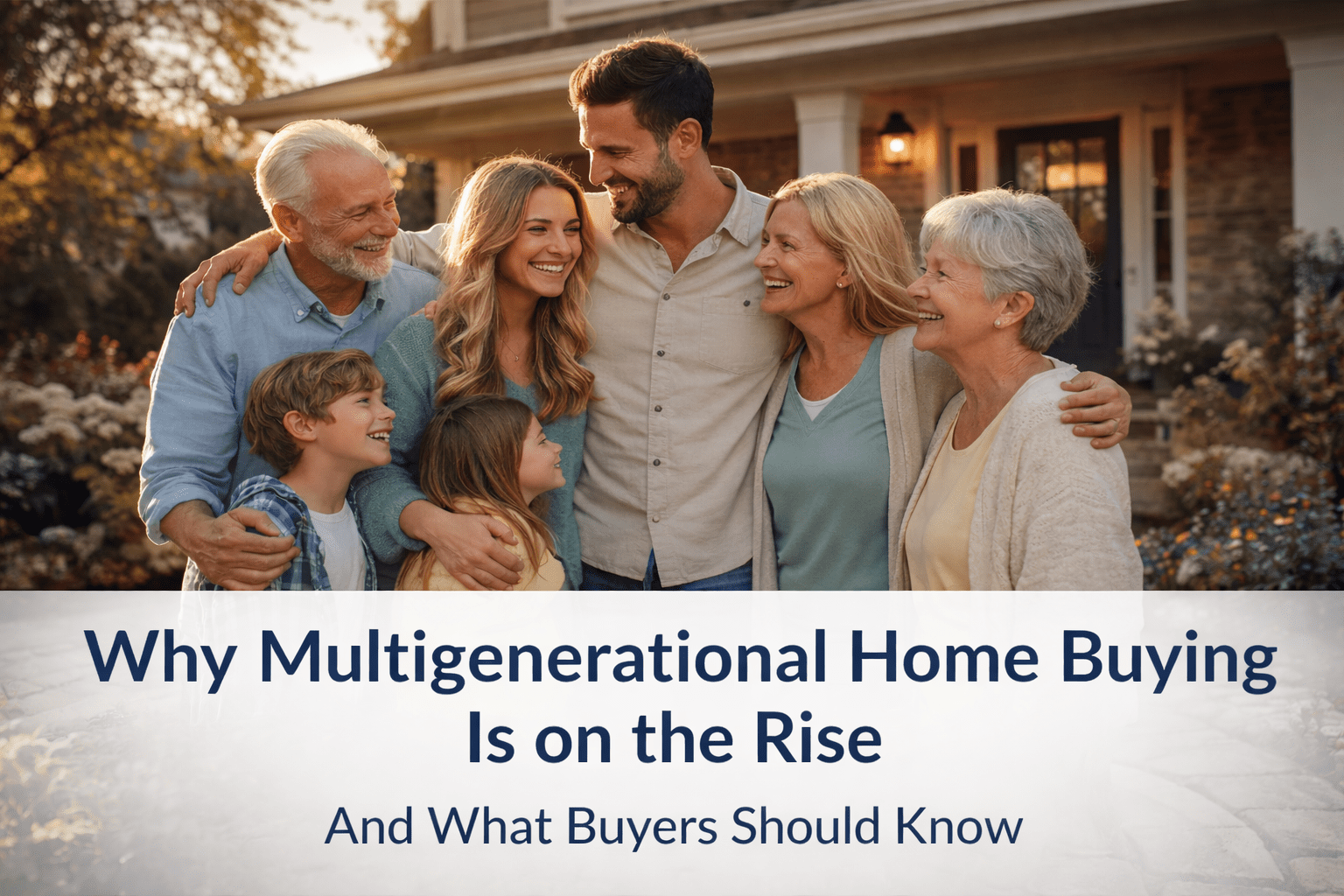
Multigenerational home buying is no longer the exception — it’s becoming one of the smartest housing strategies in today’s real estate market.
Across Queens, Long Island, and Brooklyn, more families are intentionally purchasing homes together. Whether it’s adult children moving back home, aging parents joining the household, or multiple generations buying from the start, multigenerational living is reshaping how families approach homeownership.
What was once considered unconventional is now a strategic solution for affordability, caregiving, and long-term financial planning.
Why Multigenerational Living Is Growing
Several key factors are driving this trend:
1. Affordability in Competitive Markets
Home prices and interest rates in Queens and Long Island can feel out of reach for a single household. Pooling resources allows families to:
-
Qualify for larger homes
-
Enter competitive markets
-
Share mortgage and housing expenses
-
Build equity collectively
For many buyers, combining financial strength creates opportunities that would otherwise be unavailable.
2. Care, Connection & Flexibility
Families are prioritizing:
-
Proximity for aging parents
-
Childcare support
-
Emotional connection
-
Shared responsibility
-
Lifestyle flexibility
Living under one roof—while maintaining independence—can provide both practical and emotional benefits.
What Buyers Should Look for in a Multigenerational Home
From a real estate perspective, multigenerational purchases require more than just extra square footage.
Successful multigenerational homes often include:
-
Separate living areas
-
First-floor bedrooms or private suites
-
Additional bathrooms
-
Flexible rooms that can evolve over time
-
Multiple entrances
-
Finished basements or accessory units
-
Layouts that balance togetherness and privacy
In areas like Queens and Brooklyn, legal two-family homes or properties with accessory dwelling unit (ADU) potential are especially attractive.
Financial Strategy: Protecting Relationships & Investments
Buying a multigenerational home requires thoughtful financial planning.
With an MBA in Finance and over four decades of experience, I work closely with families and their planning professionals through critical questions such as:
-
Who will be on the mortgage?
-
How will ownership be structured?
-
How will expenses be shared?
-
What happens if one party wants to sell?
-
How will equity be divided?
-
What are the long-term inheritance considerations?
Addressing these questions upfront protects both family relationships and financial outcomes.
Multigenerational buying should strengthen stability—not create future conflict.
Zoning & Local Regulations Matter
In Queens, Long Island, and Brooklyn, zoning laws vary significantly by municipality.
Buyers must carefully evaluate:
-
Whether accessory dwelling units are permitted
-
Whether conversions are legal
-
Certificate of occupancy requirements
-
Two-family vs. single-family classifications
-
Local compliance regulations
A property may appear flexible—but only legal, compliant modifications add long-term value.
Understanding municipal differences is critical to avoid costly mistakes.
A Growing Opportunity for Sellers
For sellers, multigenerational buyers represent a motivated and expanding segment of the market.
Homes that offer:
-
Flexible layouts
-
Multiple entrances
-
In-law suites
-
Finished basements
-
Legal two-family status
Can be strategically marketed to highlight multigenerational potential.
Targeted positioning can expand the buyer pool and strengthen competitive advantage.
Corporate Relocation & Multigenerational Moves
As Relocation Director for Keller Williams Realty Landmark and part of the broader KW Relocation network
KT Introduction KW Relocation
, I also assist families relocating for career opportunities while accommodating multigenerational needs.
Corporate moves often require:
-
Coordinated timelines
-
Destination services
-
Market evaluations
-
Compliance with local zoning
-
Long-term planning
When relocation intersects with multigenerational housing, strategic guidance becomes even more important.
Frequently Asked Questions About Multigenerational Home Buying
Is buying a home with parents or adult children a good idea?
Yes—when structured properly. Clear ownership agreements and financial planning are essential.
Are two-family homes better for multigenerational living?
Often, yes. Legal two-family homes provide separation and flexibility while maintaining shared ownership.
Can accessory dwelling units (ADUs) be added in Queens?
Possibly, depending on zoning and compliance regulations. Each municipality has different rules.
How do families split equity?
This depends on ownership structure. Tenancy in common and joint tenancy are common options, but legal advice is recommended.
Does multigenerational buying help with affordability?
Yes. Combining incomes can improve mortgage qualification and purchasing power.
The Long-Term View
Multigenerational living isn’t about compromise—it’s about intentional design and smart decision-making.
When done well, it can:
-
Increase financial stability
-
Support caregiving
-
Preserve independence
-
Build long-term equity
-
Strengthen family support systems
With over 40 years of experience and thousands of properties sold throughout Queens, Long Island, and Brooklyn, I help families think not only about the purchase—but about the years ahead.
When the strategy is right, multigenerational buying can be one of the most rewarding moves a family makes.